Stop Buying to Impress: Mindful Spending for Confidence

Status spending can feel like a shortcut to belonging, but it often trades long-term security for short-term approval. Mindful spending replaces that cycle with clarity: buying what supports personal values, goals, and stability. This guide breaks down why “impressing” purchases happen, how to spot them early, and practical steps to redirect money toward a life that feels genuinely confident—without performing for anyone.
Why the urge to impress is so expensive
The urge to “keep up” rarely shows up as a single dramatic purchase. It’s usually a steady drip of upgrades—slightly nicer, slightly newer, slightly more visible—until the monthly budget starts to feel tight for reasons that are hard to explain.
- Social comparison rewires “normal.” When lifestyles are curated and filtered, it’s easy to mistake highlight reels for reality—and start feeling behind.
- Identity spending turns purchases into proof. Instead of buying something because it solves a real need, the item becomes a signal of success, taste, or belonging.
- The hidden cost outlasts the novelty. Interest, delayed goals, and low-grade money stress can linger long after the “new” feeling disappears.
- Visibility makes it worse. Impressing purchases cluster around categories with fast social feedback: clothes, tech, cars, dining out, travel, and home aesthetics.
Common triggers that lead to status spending
Most “impressing” spending starts as a feeling, not a plan. The fastest way to change the pattern is learning what reliably lights the fuse.
- Emotional triggers: insecurity, loneliness, boredom, or the urge to feel “caught up.”
- Social triggers: weddings, reunions, work events, or friend groups where high-spend behavior is treated as normal.
- Digital triggers: targeted ads, influencer content, and limited-time offers engineered to create urgency.
- Milestone triggers: a new job, breakup, moving, or a birthday that makes identity feel in flux.
- Environment triggers: malls, upscale neighborhoods, or shopping apps that turn browsing into buying.
If stress is part of the cycle, it helps to know it’s common for money worries to compound overall tension. Resources like the American Psychological Association’s stress overview can help connect the dots between financial pressure and emotional decision-making.
A quick self-check before any purchase
Mindful spending doesn’t mean never buying nice things. It means building a small decision filter that protects you from purchases you’ll need to “justify” later.
- Ask: “Would this still feel worth it if nobody saw it?”
- Name the need: function (solves a problem), joy (adds real happiness), or image (signals status).
- Add a pause: 24 hours for small buys, 7–30 days for big buys. Urgency is rarely real.
- Check total cost: shipping, subscriptions, accessories, maintenance, interest, and replacement cycles.
- Run a regret forecast: imagine explaining it to your future self who wants more savings and less stress.
| Question | Green light | Yellow light | Red light |
|---|---|---|---|
| If nobody knew, would it still matter? | Yes, it improves life | Maybe, not sure | No, it’s mainly for approval |
| What problem does it solve? | Clear, specific need | Nice-to-have | No real problem |
| Can it wait 7 days? | Yes | Uncomfortable but possible | Feels impossible due to FOMO |
| Will it strain next month’s budget? | No impact | Tight but manageable | Creates debt or skipped bills |
| Does it fit top goals (savings, debt, freedom)? | Directly supports | Neutral | Actively delays goals |
For extra protection from online buying traps and urgency tactics, the Federal Trade Commission’s consumer guidance is a solid place to learn the patterns behind “limited-time” pressure.
Replace “looking successful” with “being secure”
The most confident people often have a quiet kind of stability: they can handle surprises, say no without panicking, and spend without the hangover. That’s a better target than “looking like” you have it together.
- Define success metrics that aren’t visible. An emergency fund, decreasing debt, growing skills, better health, more time freedom.
- Create a “confidence budget.” A small, guilt-free line item for values-aligned spending that doesn’t require approval.
- Pick 1–2 signature categories. Spend intentionally where you genuinely care (fitness, learning, travel, hobbies) and simplify the rest.
- Choose “quiet upgrades.” Improve quality where it affects daily comfort, not social signaling.
- Celebrate privately. Tracking milestones builds internal validation that doesn’t depend on compliments.
If budgeting feels intimidating, the CFPB budgeting resources offer practical frameworks for getting started and staying consistent.
Scripts for social pressure (without making it awkward)
Build lasting financial confidence in 30 days
Week 1: Spot the pattern
Week 2: Reduce exposure
Week 3: Automate one win
Week 4: Install guardrails
A practical guide for breaking the cycle
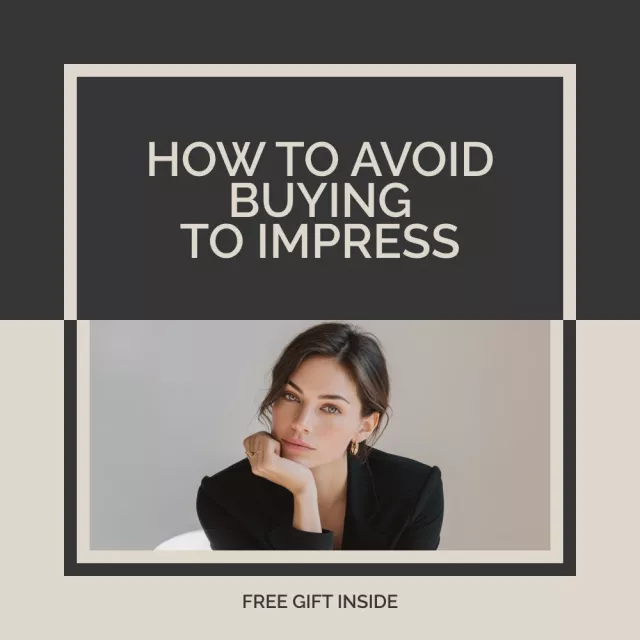
If motivation is high but habits keep snapping back—especially around social events, online browsing, or emotional spending—structured support helps. The digital guide How to Avoid Buying to Impress: Mastering Mindful Spending offers a step-by-step approach to breaking status spending patterns and building lasting financial confidence.
To make the new habits measurable, pair mindful spending with a simple tracking system. How to Build a Budget in Excel (Even If You’re Not a Numbers Person) is a practical option for organizing categories, setting limits, and seeing where “image” spending has been quietly taking over.
FAQ
How can status spending be stopped without feeling deprived?
Shift to values-based spending and keep a small “confidence budget” for guilt-free purchases that truly matter to you. As savings and progress become visible, the sense of deprivation fades because you’re trading impulse for stability.
What’s a simple rule to avoid impulse buys meant to impress others?
Use a waiting period (24 hours to 7+ days) and ask, “Would I still buy this if nobody saw it?” If it threatens next month’s bills or savings, it’s a no until your plan says otherwise.
How do social media and ads make people overspend on appearances?
They intensify comparison, normalize luxury as everyday, and use urgency tactics to short-circuit reflection. Reducing exposure—unfollowing triggers, disabling notifications, and limiting browsing windows—cuts the pressure dramatically.














Leave a comment