Used Car Test Drive Checklist: What to Check Before You Buy
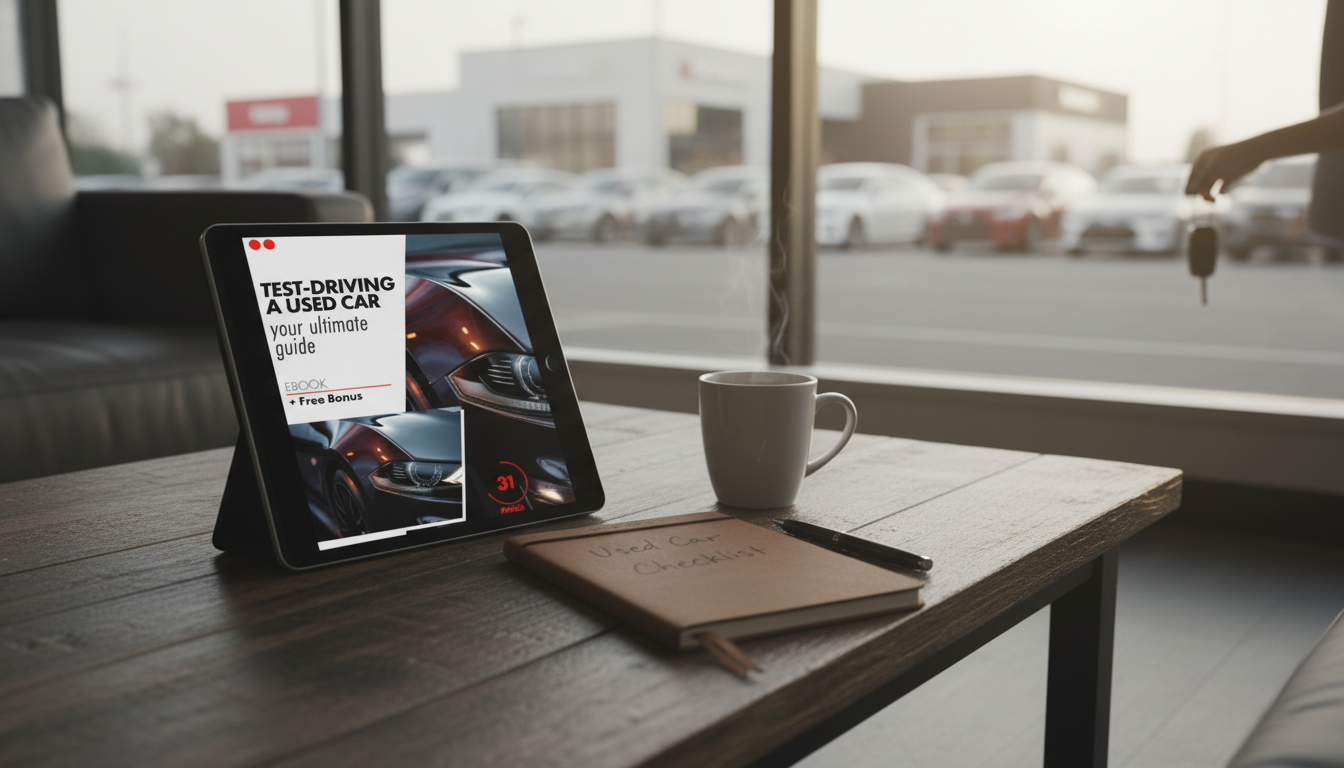
Your Ultimate Guide to Test-Driving a Used Car – Everything You Need to Know Before You Buy
A test drive is the fastest way to spot deal-breakers that photos and listings can’t show: odd noises, shaky braking, sluggish acceleration, or warning lights that come and go. With a simple plan—before, during, and after the drive—each mile becomes a checklist that protects the budget and reduces surprises after purchase.
Before the test drive: set up a fair comparison
Good test drives feel unhurried. Great test drives are repeatable—so you can compare one vehicle to the next without guessing what changed.
- Bring a driver’s license, proof of insurance (if required), and a phone charger so navigation and recording features can be tested.
- Schedule the drive when roads are less busy to include city streets, rough pavement, and highway speeds without rushing.
- Ask in advance for a cold start; engines can hide issues when already warmed up.
- Confirm the exact trim and drivetrain (FWD/AWD/4WD), and whether any modifications were made (lift kits, tunes, aftermarket wheels).
- Have a short list of must-check features: AC/heat, infotainment, backup camera, driver-assist, power seats, sunroof, and keyless entry.
If you want a printable, step-by-step format you can reuse for every car you try, use the Test-driving checklist guide.
Walk-around inspection: quick clues before the key turns
A two-minute loop around the car can reveal whether the vehicle was cared for—or simply cleaned up for a quick sale.
- Check body panels for mismatched paint, uneven gaps, or overspray around trim—possible signs of collision repair.
- Look at tire wear: uneven edges can suggest alignment or suspension issues; confirm tires match as a set and have safe tread depth.
- Inspect glass and lights for cracks, moisture inside housings, and non-matching headlight brands that might indicate prior damage.
- Peek underneath for fresh fluid drips, heavy rust on structural areas, or dangling plastic shields.
- Open and close all doors, hood, and trunk/hatch; sticking latches or sagging doors can hint at prior impacts.
Fast pre-drive checks and what they can mean
| Check | What to look for | Possible cause |
|---|---|---|
| Tires | One tire more worn than the others | Alignment, suspension wear, or inconsistent maintenance |
| Brakes (visual) | Deep lip on rotors or very thin pads | Brake job needed soon |
| Fluids (ground) | Wet spots under engine or transmission | Oil/coolant/transmission leak |
| Body gaps | Uneven spacing between panels | Prior collision or poor repair |
| Headlights | One foggy/newer than the other | Replacement after damage or age mismatch |
Inside the cabin: comfort, function, and warning signs
Cabins tell stories. A car can be mechanically fine but still be a frustrating daily driver if key functions don’t work as they should.
- Smell for dampness, mildew, or strong air fresheners that may be masking water intrusion or smoke.
- Turn the ignition to accessory mode first and confirm warning lights illuminate briefly (they should) and then go out after start.
- Test every window, mirror, seat adjuster, heater fan speed, and wipers; intermittent electronics can be expensive to chase.
- Check the infotainment: Bluetooth pairing, USB ports, navigation, speakers at low and moderate volume for rattles or distortion.
- Verify seat comfort and driving position: pedal alignment, visibility, steering wheel adjustability, and headrest placement.
Cold start and idle: listen before you drive
A cold start is where many problems show themselves: weak batteries, timing noise, rough running, and smoke that disappears once warmed up.
- Start the car with the radio off and HVAC off; listen for rattles, ticking, belt squeal, or a rough idle.
- Watch the tachometer and feel for vibrations through the seat and steering wheel; misfires often show up here.
- Check the exhaust: excessive white smoke after warm-up, blue smoke, or strong fuel odor can signal engine issues.
- Confirm the engine reaches normal temperature steadily; fluctuating temperature can point to cooling system problems.
- Engage AC and heat at idle to see if the idle changes dramatically or if the compressor cycles with loud clicks.
On the road: a route that reveals the truth
Try to build a route that forces the vehicle to do what you’ll ask of it in real life. If a seller pushes for a quick loop around the block, that’s a reason to slow down—not speed up.
Feature checks while driving: tech, safety, and usability
After the drive: confirm, document, negotiate
Before finalizing anything, it also helps to check for open safety recalls at NHTSA’s recall database, and to review consumer guidance from the Federal Trade Commission. For another practical inspection list to compare against your notes, see Carfax’s used car checklist.
A simple checklist that fits in your pocket
Helpful digital guides you can keep open on your phone
- Your Ultimate Guide to Test-Driving a Used Car – Everything You Need to Know Before You Buy
- How to Build a Budget in Excel (Even If You’re Not a Numbers Person)
- Mastering the Art of a Flexible Travel Schedule
FAQ
How long should a used-car test drive be?
Aim for 20–30 minutes with a mix of city streets, rough pavement, and highway speeds. Longer is better if it enables a true cold start and varied conditions.
What should be an immediate no-go during a test drive?
Persistent warning lights, overheating, harsh or slipping shifts, strong burning smells, heavy steering vibration at speed, or braking that pulls to one side are strong reasons to walk away or pause for a professional inspection.
Is a pre-purchase inspection still necessary if the test drive feels fine?
Yes. A mechanic can spot hidden leaks, pending diagnostic codes, suspension play, and signs of prior repairs that may not show up during a short drive.















Leave a comment