Rebuild Motivation After Burnout: A Gentle 7-Day Reset

Rekindling Motivation After Burnout: A Step-by-Step Reset That Feels Possible Again
Burnout can make even small tasks feel heavy, and forcing motivation often backfires. A steadier path is to reduce load, restore basics, and rebuild momentum in tiny, repeatable steps. The framework below focuses on recovery-first habits, simple planning, and low-pressure wins—supported by a printable guide that turns the process into quick daily check-ins and prompts.
Burnout vs. “Just Unmotivated”: signs that change the approach
A normal motivation dip usually improves after real rest: a weekend with fewer obligations, a good night’s sleep, or a short break from a stressful project. Burnout tends to linger even after downtime, because it’s not just tiredness—it’s a system-wide “too much for too long” state.
- Motivation dips often come with clear causes (a boring task, a busy week) and lift when you reset.
- Burnout patterns can include emotional exhaustion, cynicism or detachment, and a reduced sense of effectiveness—feeling like effort no longer “works.”
- Willpower tactics can worsen burnout by adding pressure and guilt, which further reduces recovery and makes starting even harder.
- Consider professional support if you have persistent sleep disruption, panic symptoms, hopelessness, or trouble functioning day-to-day. Trusted overviews include the American Psychological Association’s burnout resources and NIMH guidance on caring for your mental health. The World Health Organization’s ICD-11 note on burnout is also a helpful reference for what burnout is (and isn’t).
Step 1: Stabilize the basics before chasing motivation
When your baseline is shaky, motivation becomes an unreliable tool. Start by protecting the basics that lower friction—sleep, fuel, calm, and environment. Choose 1–2 actions for a week, not a full overhaul.
- Sleep and energy first: pick one sleep-protecting rule (consistent wake time, no late caffeine, or a 30-minute wind-down).
- Food and hydration as throughput: “good enough” meals count. Add a visible water cue (a bottle on your desk, a glass by the sink).
- Nervous system downshift: 2–5 minutes of slow breathing, a short walk, or gentle stretching can reduce the internal resistance that makes everything feel harder.
- Environmental relief: remove one recurring stressor—notifications, a clutter hotspot, or an obligation you can pause.
| Area | Low-effort option | What success looks like |
|---|---|---|
| Sleep | Set a consistent wake time | Waking within a 30-minute window most days |
| Body | 10-minute walk or gentle stretch | Movement without intensity or goals |
| Fuel | Add one simple protein option | Fewer energy crashes mid-day |
| Calm | 3 minutes of slow breathing | Slightly lower tension after the exercise |
| Load | Cancel or postpone one non-urgent task | More breathing room without guilt spirals |
Step 2: Reduce the “should” list and define a smaller season
Burnout often comes with an invisible contract: “I should be able to do all of this.” A reset begins when you define a smaller season—just for 2–4 weeks—where the goal is stability and recovery, not peak output.
- Brain-dump demands: list everything pulling your attention, then mark what’s truly non-negotiable for the next few weeks.
- Create a minimum viable day: the smallest version of responsibilities that keeps life moving (basic hygiene, one meal plan, one essential work task, one connection point).
- Replace vague expectations with constraints: fewer meetings, fewer errands, fewer open projects. Time-box what remains.
- Use boundary scripts: “I can’t take that on this week.” “I can do this, but not by Friday.” “Let me revisit this after the 15th.”
Step 3: Rebuild motivation with micro-wins (the 10-minute rule)
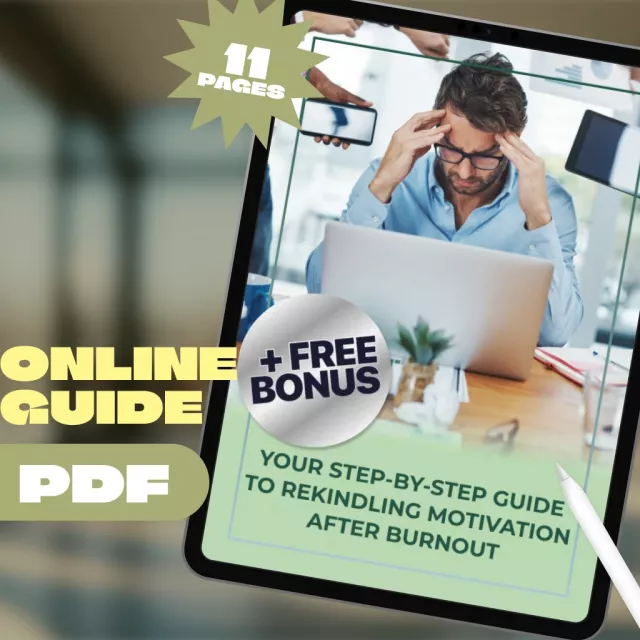
If you want a structured way to keep this gentle and consistent, Printable PDF: Your Step-by-Step Guide to Rekindling Motivation After Burnout turns these steps into daily prompts you can complete in minutes.
Step 4: Create a gentle weekly rhythm (recover, then build)
7-day motivation reboot plan (low pressure, high repeatability)
| Day | Focus | 10-minute action | Check-in question |
|---|---|---|---|
| Day 1 | Reduce load | Cancel/renegotiate one non-essential commitment | What felt lighter immediately? |
| Day 2 | Restore basics | Prep one easy meal or snack option | When did energy dip today? |
| Day 3 | Micro-win | 10 minutes on the smallest step of your anchor goal | What made starting easier? |
| Day 4 | Environment | Clear one small surface or digital folder | What friction disappeared? |
| Day 5 | Connection | Reach out to one supportive person | Did connection change your stress level? |
| Day 6 | Movement | Gentle walk or stretch for 10 minutes | How did your body feel after? |
| Day 7 | Review & adjust | Write 5 bullets: keep/stop/start for next week | What is the next smallest step? |
Step 5: Prevent relapse with sustainable motivation cues
Printable support: turn the steps into a daily guide
For a ready-to-use format, Your Step-by-Step Guide to Rekindling Motivation After Burnout – Printable PDF Guide is designed for quick check-ins and gentle momentum.
If your burnout was fueled by content overload or perfection pressure, consider simplifying your workflow with practical resources like Double-Check AI Edits with Confidence (eBook Guide) or reducing planning friction using Mastering the Art of a Flexible Travel Schedule (Digital Guide) when life feels unpredictable.
FAQ
How long does it take to get motivated again after burnout?
It varies based on severity and whether the stressors are still ongoing. Start by stabilizing basics, then rebuild with tiny, consistent actions; if functioning is impaired or symptoms persist, professional support can help.
What if the 10-minute rule still feels like too much?
Scale it down to 2 minutes or do a “setup-only” step, like opening the file or laying out tools. The goal is a doable start that rebuilds trust and reduces friction.
Is it normal to feel guilty when resting after burnout?
Yes—especially if productivity has been tied to identity or self-worth. Rest is a form of recovery that restores capacity, and boundaries help protect it while you reset.















Leave a comment