Quiet Confidence Checklist: Printable Steps for Social Anxiety
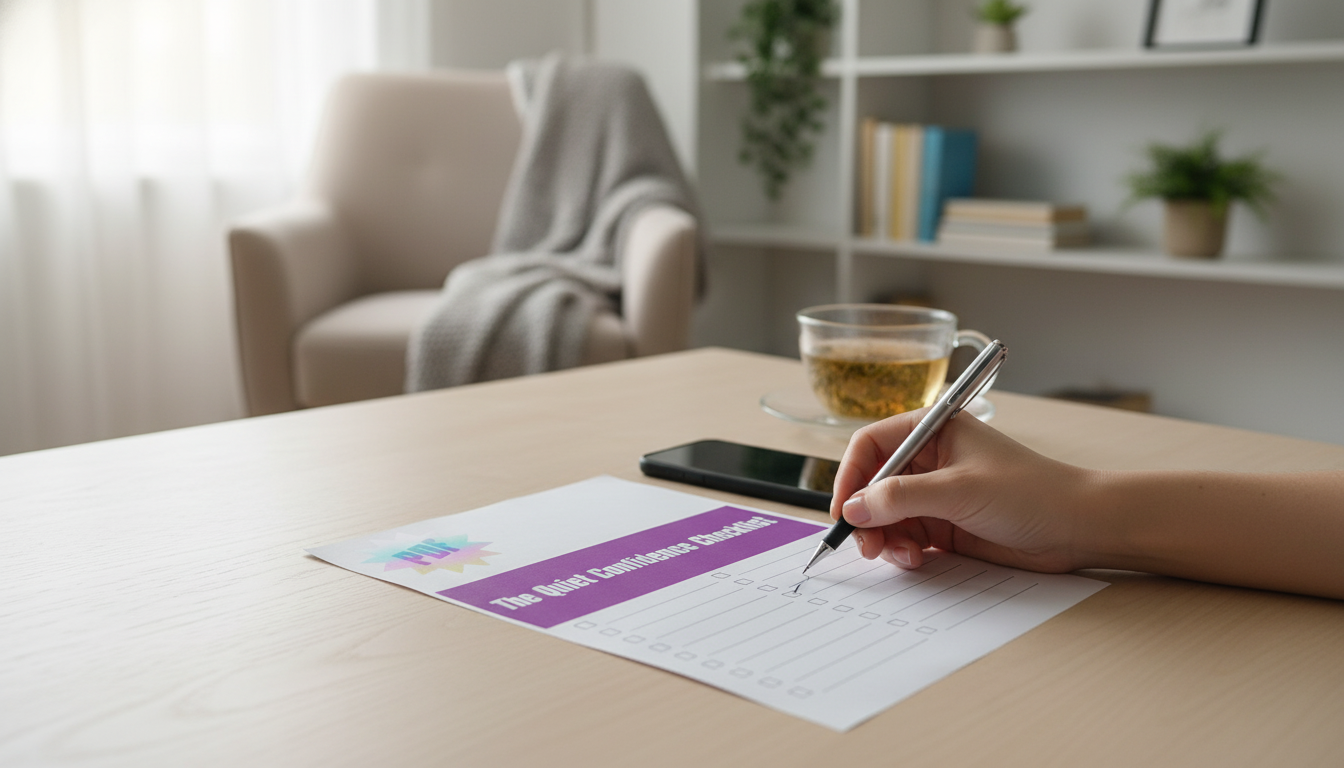
The Quiet Confidence Checklist: A Printable Plan for Feeling Steadier in Social Moments
Social anxiety can make everyday interactions feel high-stakes, even when the goal is simply to show up and get through the moment. The Quiet Confidence Checklist is a printable, step-by-step tool designed to reduce overwhelm by breaking social situations into small, doable actions—before, during, and after an event. Used consistently, a checklist approach can support calmer preparation, clearer self-talk, and gentler reflection without turning confidence into a performance.
Why a checklist can help when social anxiety spikes
When anxiety rises, the brain often searches for certainty—what to say, where to stand, how long to stay, what to do with your hands. A checklist gives that “what now?” energy a place to go.
- Reduces decision fatigue by turning “What should I do?” into a short sequence of next steps.
- Creates predictability with a simple routine for common triggers like arrivals, small talk, and group settings.
- Supports skill-building through repetition so the same steps feel more natural over time.
- Encourages self-compassion by including a post-event reset rather than harsh self-judgment.
- Pairs well with therapy or self-help as a between-sessions anchor for practice.
For background on how social anxiety can show up and why it can feel so consuming, reputable overviews from the National Institute of Mental Health and the American Psychological Association can be helpful.
What’s inside The Quiet Confidence Checklist
The checklist is designed for real life: quick to scan, easy to reuse, and focused on actions that lower intensity rather than “fix” feelings on command.
- A printable checklist built for everyday social situations—simple enough to use when nerves spike.
- Guided prep prompts for body, environment, and expectations to reduce anticipatory anxiety.
- In-the-moment cues that prioritize grounding, pacing, and small connection over perfection.
- A short post-event review to capture what went well and what to tweak next time.
- Digital download format for printing or using on a tablet/phone for quick access.
Checklist flow at a glance
| Phase | Goal | Examples of what to check off |
|---|---|---|
| Before | Lower the ramp-up | Name the situation; choose a simple objective; plan a gentle arrival |
| During | Stay present and steady | Breathe low and slow; use a grounding cue; ask one easy question |
| After | Reset and learn | Release tension; note one win; pick one next step for next time |
How to use the checklist for different social situations
One of the most calming parts of a checklist is that it travels well—your steps can stay basically the same, even when the setting changes.
Work events
Define “minimum success” before you go, so anxiety doesn’t move the goalposts mid-event. Example: show up, greet one person, and stay 20 minutes. If you do more, it’s a bonus—if you do only that, it still counts.
Parties or gatherings
Plan a soft exit strategy that doesn’t require a dramatic goodbye. A brief recharge option (stepping outside, a bathroom break, grabbing water) can prevent a buildup that turns into “I have to leave right now.”
Dating
Shift the focus from performing to noticing. Curiosity reduces pressure: listen for one detail you can follow up on. Keep two fallback questions ready (simple, open-ended, and kind) to help with blank-mind moments.
Classroom or meetings
Rehearse one sentence you could contribute, even if it’s short: “One thing I noticed…” or “A question I have is…” Speaking earlier can lower the internal buildup that makes it harder later.
Phone calls
Write a two-line script—your opening plus your main point—and keep it next to the checklist. The goal is not sounding “perfect,” but getting through the call without spiraling.
A gentle confidence routine (10 minutes before, 2 minutes during, 5 minutes after)
This routine is intentionally modest. The aim is steadiness, not a personality overhaul.
- 10 minutes before: Do a quick body reset (hydrate, posture check, slow exhale) and pick one realistic goal.
- Swap catastrophic predictions for a neutral, believable thought: “This may feel uncomfortable, and it can still be manageable.”
- 2 minutes during: Use a discreet grounding technique (feel your feet; name 3 things you see; slow your exhale).
- If anxiety surges: Pause, label the feeling (“This is anxiety”), and return to one simple action (smile, nod, ask one question).
- 5 minutes after: Decompress, then record one win and one adjustment—small, specific, and practical.
Over time, this “before/during/after” pattern can make social moments feel less like a cliff and more like a path with handrails.
Making it stick: practical tips for printing and reusing
Recommended digital tools (in stock)
- The Quiet Confidence Checklist – How to Be Confident with Social Anxiety | Printable Anxiety Relief Tool, Digital Download, Self-Help Guide
- Mastering the Art of a Flexible Travel Schedule | Digital Guide for Modern Explorers | Learn How to Create a Flexible Travel Schedule with Ease
- Double-Check AI Edits with Confidence: Essential eBook Guide with Practical Tips to Double Check AI Edits Manually for Flawless Content
When to seek extra support
FAQ
Is this checklist suitable for severe social anxiety?
It can provide structure and small coping steps, but severe or highly impairing social anxiety often benefits from professional care. Many people use a checklist alongside therapy as a practical between-sessions support.
Can the download be used on a phone or does it need to be printed?
It works as a digital file on a phone or tablet, and it can also be printed if you prefer paper. Saving it as a favorite PDF or keeping it in a notes app can make it easier to pull up quickly.
How quickly can it help?
Many people feel immediate relief from simply having a plan to follow in the moment. Bigger gains typically build over days and weeks as the steps become familiar and your goals stay small and consistent.














Leave a comment